 EN
EN  AR
AR  RU
RU  ES
ES  DE
DE  PT
PT Aluminum looks easy to machine until chips start welding to the cutting edge, the surface becomes cloudy, or the spindle load rises in a deep slot. Compared with hardened steel or titanium, aluminum has lower cutting force. But its high ductility, fast chip volume, and tendency to form built-up edge make tool geometry extremely important.
For this reason, carbide end mills for aluminum should not be selected only by diameter and flute count. A good aluminum end mill needs the right carbide substrate, sharp cutting edge, polished flute, strong chip evacuation space, suitable helix, and in some cases a DLC coating. This article explains why those details matter and how SDF O Series carbide end mills support high-speed machining of aluminum and copper alloys.
Why Aluminum Needs a Different End Mill Geometry
In steel machining, the tool often needs stronger edge support and a coating that can resist heat and abrasive wear. In aluminum machining, the priority changes. The tool must shear the material cleanly, move a large chip volume out of the cut, and prevent aluminum from sticking to the flute or cutting edge.
If chip evacuation is poor, chips are re-cut inside the slot. Re-cutting produces heat, damages the cutting edge, marks the workpiece surface, and can eventually break the tool. If the cutting edge is not sharp enough, aluminum may smear instead of cutting cleanly. This is why aluminum end mills often use a polished flute, high rake geometry, and a larger chip pocket than general-purpose steel end mills.
3-Flute End Mills for Aluminum: A Balanced Choice
Two-flute tools provide large chip space and are useful for softer materials or lighter machines. Four-flute tools can be productive in some side milling and finishing operations, but chip space may become limited in slotting. For many CNC aluminum applications, a 3-flute carbide end mill gives a practical balance between chip evacuation, tool strength, and feed capability.
A 3-flute aluminum end mill can carry more feed than a 2-flute tool while still leaving enough flute space for chips. This is valuable in 6061, 7075, aluminum housings, electronic components, fixture plates, aerospace aluminum structures, and copper alloy parts. The exact feed, speed, and depth of cut still depend on machine rigidity, holder quality, coolant, tool diameter, flute length, and slot engagement.
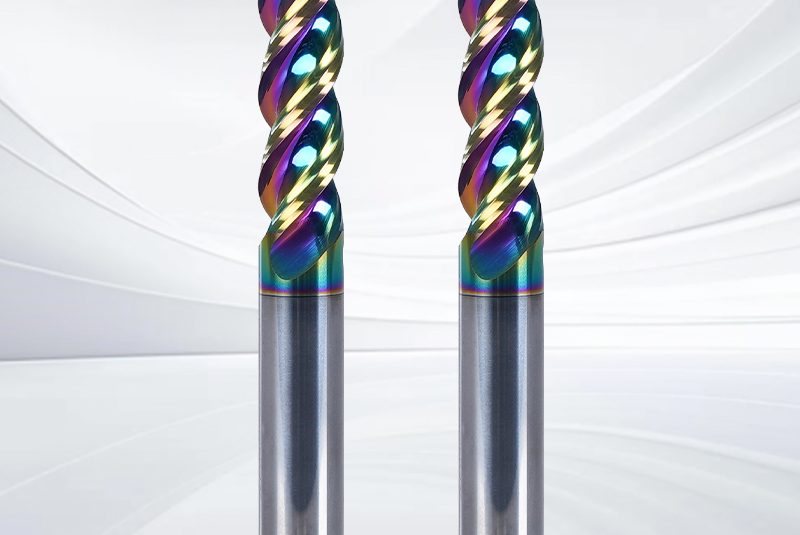
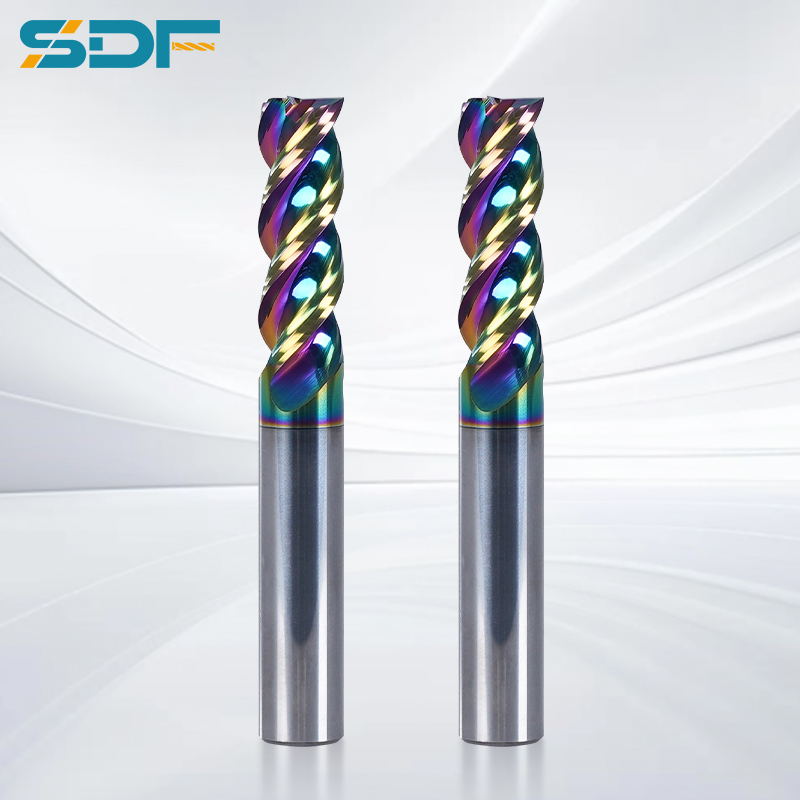
The SDF-O Series 3-flute square end mill for aluminum and copper alloys is designed for this type of general aluminum machining. It can be used when the customer needs a clean cutting action and stable chip evacuation in common milling operations.
Why Polished Flutes Improve Surface Finish
Flute polish is not just cosmetic. A smoother flute reduces friction between the chip and tool surface. This helps chips leave the cutting zone faster and reduces the chance of built-up edge. Built-up edge changes the cutting geometry during machining. Once aluminum sticks to the edge, the tool no longer cuts with its original sharpness, and the workpiece finish can become unstable.
Polished flutes are especially useful in slotting, pocketing, deep side milling, and high-speed finishing. They are also valuable when coolant is limited or when mist cooling is used. In production, a tool that evacuates chips cleanly can reduce operator adjustment and make surface quality more predictable.
DLC Coated End Mills for Aluminum
DLC coating is often selected for aluminum and copper alloy machining because it has low friction and good resistance to built-up edge. It is not the answer for every aluminum job. A sharp uncoated polished tool may be enough for many applications, especially when the process is stable and coolant works well. But when the customer needs longer tool life, better surface quality, or more stable performance in sticky aluminum, a DLC coated end mill can be a strong option.
The SDF-O Series DLC coated U-groove square end mill is built for aluminum and copper alloy machining where chip evacuation and low friction are important. SDF also offers an uncoated U-groove aluminum end mill for applications where a sharp polished geometry is preferred.
U-Groove Geometry and Chip Evacuation
U-groove flute design is often used for non-ferrous materials because it provides chip space and a smooth path out of the cut. The goal is simple: chips should leave the cutting zone instead of packing into the flute. This becomes critical when machining deep pockets, full slots, narrow cavities, or high-speed aluminum components.
Chip evacuation is affected by more than the tool. Air blast, coolant direction, toolpath strategy, radial engagement, axial depth, machine enclosure airflow, and fixturing all change chip behavior. Even the best carbide end mill for aluminum can fail if chips are trapped in a closed pocket. A good article or process plan should therefore discuss both the tool and the cutting environment.
How to Choose Between Uncoated, DLC, and Single-Flute Tools
| Tool Type | Best Use | Main Advantage |
|---|---|---|
| Uncoated polished 3-flute end mill | General aluminum and copper machining | Sharp edge and efficient chip evacuation |
| DLC coated 3-flute U-groove end mill | Sticky aluminum, longer runs, high finish demand | Lower friction and reduced built-up edge |
| 2-flute ball nose aluminum end mill | 3D surfaces and contour finishing | Smoother toolpath contact for curved surfaces |
| Single-flute DLC end mill | High-speed machining and small tools | Maximum chip space and low cutting resistance |
For single-edge aluminum machining, see the SDF-O Series single flute end mill for aluminum with DLC coating. For 3D aluminum surfaces, the SDF-O Series 2-flute ball nose end mill for aluminum and copper can be a better choice.
Common Problems in Aluminum Milling
When aluminum milling is unstable, the problem is often visible on the part or audible at the machine. A rough or cloudy finish may indicate built-up edge, dull cutting edges, poor chip evacuation, or incorrect coolant direction. Burrs can come from an edge that is not sharp enough, an unsuitable feed per tooth, or tool deflection. Chatter marks usually point to excessive overhang, weak workholding, low rigidity, or an aggressive toolpath.
Before changing the tool, check whether chips are leaving the cut. Then check runout, holder condition, flute length, radial engagement, and cutting data. A short, rigid tool with a polished flute often solves more problems than a longer tool with the same diameter.
How SDF Supports Aluminum Milling
SDF manufactures solid carbide cutting tools with in-house geometry design and imported Swiss and German grinding and inspection equipment. For aluminum and copper alloys, the SDF O Series includes 3-flute square end mills, radius end mills, ball nose end mills, U-groove end mills, DLC coated options, and single-flute designs.
For common aluminum machining, customers can start from the standard SDF Carbide End Mills for Aluminum range. For unusual cavity depth, special corner radius, long reach, high-gloss finishing, or part-specific chip evacuation problems, SDF can review the drawing and recommend a standard or custom carbide cutting tool.
FAQ
Are carbide end mills good for aluminum?
Yes. Solid carbide end mills are widely used for aluminum because they allow high cutting speed, sharp geometry, good rigidity, and stable accuracy. The geometry should be designed for aluminum rather than copied from a steel end mill.
Should I use coated or uncoated end mills for aluminum?
Both can work. Uncoated polished tools are sharp and effective in many aluminum applications. DLC coated end mills are useful when built-up edge, tool life, or surface consistency is a concern.
Is a 3-flute end mill better than a 2-flute end mill for aluminum?
A 3-flute tool is often a balanced choice because it allows higher feed while keeping enough chip space. A 2-flute tool may still be better for some softer materials, lighter machines, or operations requiring very large chip evacuation space.
When should I request a custom aluminum end mill?
Request a custom tool when standard geometry cannot meet the required reach, corner radius, surface finish, chip evacuation, cycle time, or tool life target.