 EN
EN  AR
AR  RU
RU  ES
ES  DE
DE  PT
PT Thread quality is often decided before the first chip is made. In CNC machining, the choice between tapping and thread milling affects tool life, scrap risk, thread accuracy, and the stability of the whole process. For simple low-risk holes, a tap may still be the fastest option. But when the workpiece is expensive, the material is difficult, or the thread form is not ordinary, carbide thread mills give engineers a much wider process window.
This guide explains how to choose carbide thread mills for internal and external threads, how single-tooth and full-form thread milling cutters differ, and how SDF thread milling tools can support steel, stainless steel, aluminum, titanium alloys, high-temperature alloys, and custom thread requirements.
Why Carbide Thread Mills Are Used in Precision CNC Machining
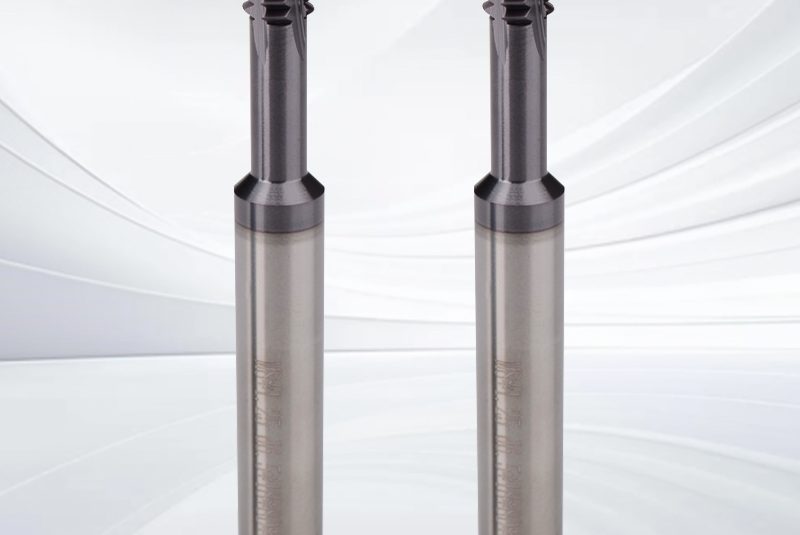
A carbide thread mill cuts the thread by helical interpolation instead of forming or cutting the full thread profile in one axial movement. The tool rotates like an end mill while the machine moves in a circular path. This makes the process more controllable than conventional tapping in many applications.
The main advantage is risk control. If a tap breaks inside a finished part, the workpiece may be scrapped. A thread milling cutter has a smaller cutting diameter than the thread and can often be removed more easily if a problem occurs. Cutting load is also distributed differently, which helps when machining hard materials, stainless steel, titanium, or high-value components.
Thread milling also gives flexibility. One tool can often cover different thread diameters with the same pitch, depending on the tool design and CNC program. For prototype work, small batches, repair work, and parts with multiple thread sizes, this flexibility can reduce tool inventory and simplify process planning.
Internal Thread Mill vs External Thread Mill
Internal thread milling is used for threaded holes. The tool enters the prepared hole and machines the thread profile by interpolation. It is common in mold components, hydraulic blocks, aerospace brackets, medical parts, and precision machine components. Internal thread mills are especially useful when the hole is blind, when the bottom clearance is limited, or when the material is likely to work harden.
External thread milling is used on bosses, shafts, fittings, pipe connections, and special threaded forms. Compared with turning, external thread milling can be useful when the part is already on a machining center, when the thread is on a non-rotational component, or when the component geometry makes turning less convenient.
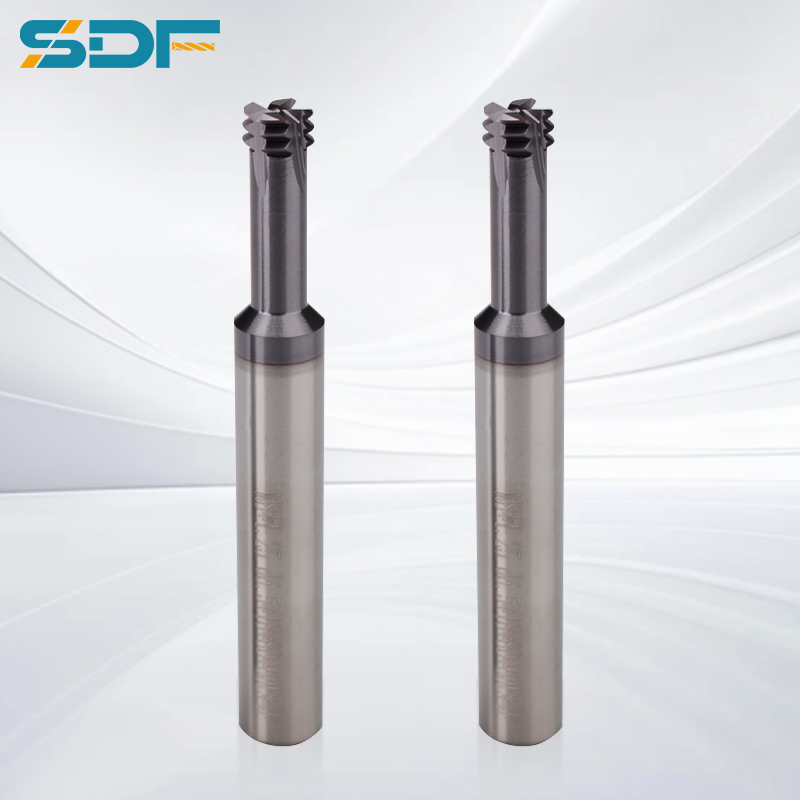
SDF supplies both internal and external carbide thread mills. The product range includes metric thread mills, unified thread mills, BSP and BSPT thread mills, NPT thread mills, single-tooth tools, three-tooth tools, full-form tools, and special thread milling cutters for titanium alloys and high-temperature alloys.
Single-Tooth Thread Mills: Flexible and Safe
Single-tooth carbide thread mills are often selected when flexibility and process safety matter more than the shortest cycle time. Because only one tooth section is cutting the thread profile at a time, cutting force is controlled and chip evacuation is relatively stable. This makes single-tooth thread milling cutters useful for small threads, difficult materials, and applications where the engineer wants to reduce the risk of tool breakage.
For example, the SDF-P Series Solid Carbide Single-Tooth Thread Milling Cutter for Steel is designed for steel applications where thread quality and controlled cutting are important. For harder and more difficult materials, SDF also offers the single-tooth thread mill for titanium alloys and high-temperature alloys.
Full-Form Thread Mills: Higher Productivity for Standard Threads
Full-form carbide thread mills cut the full thread profile over a defined thread length. They are usually faster than single-tooth tools when the thread specification is fixed and the production volume is higher. The tradeoff is that a full-form tool is less flexible: it is made for a specific pitch, thread form, and thread depth range.
When the part family is stable, full-form thread mills can improve consistency and reduce cycle time. SDF full-form options include full-thread metric internal thread milling cutters for steel, external metric thread mills, American standard thread mills, BSP pipe thread mills, BSPT tapered pipe thread mills, and NPT thread milling cutters.
When to Choose a No-Pilot-Hole Thread Milling Cutter
A no-pilot-hole thread milling cutter is designed to reduce process steps in selected applications. Instead of drilling a pilot hole first and then threading, the tool can create the required hole and thread path under suitable conditions. This can be valuable when the workpiece design allows it and the machine has enough rigidity.
The benefit is not only time saving. Fewer tool changes can reduce accumulated positioning error, especially on small features or batches with many threaded holes. However, this style of tool should be selected carefully. Material, thread size, hole depth, coolant, spindle rigidity, and workholding all matter. In unstable conditions, a conventional pre-drilled process may still be safer.
For steel machining, see the SDF-P Series no-pilot-hole metric thread milling cutter for steel. For aluminum applications, SDF also offers a DLC coated no-pilot-hole thread milling cutter for aluminum.
Material, Coating, and Geometry Selection
For steel and pre-hardened steel, a wear-resistant coating such as AlCrN-type coating is commonly used to protect the cutting edge from heat and abrasion. For stainless steel, the tool must resist work hardening and maintain edge strength while evacuating chips cleanly. For aluminum and copper alloys, a polished flute and low-friction coating such as DLC can reduce built-up edge and help maintain thread finish.
Titanium alloys and high-temperature alloys require a different approach. These materials have low thermal conductivity and can concentrate heat at the cutting edge. A stable carbide substrate, suitable coating, controlled feed, and reliable coolant strategy are important. Tool overhang should be kept as short as possible, and the machine should use a rigid holder and stable interpolation program.
Practical Selection Guide
| Application | Recommended Tool Direction | Main Reason |
|---|---|---|
| Small threads and mixed sizes | Single-tooth carbide thread mill | High flexibility and lower cutting force |
| Stable batch production | Full-form thread mill | Shorter cycle time and consistent profile |
| Titanium or high-temperature alloy | Dedicated coated thread mill | Heat resistance and edge stability |
| Aluminum threaded holes | DLC coated or polished flute tool | Reduced built-up edge and cleaner finish |
| Special pipe threads | NPT, BSP, or BSPT thread mill | Correct thread form and taper/parallel profile |
How SDF Supports Thread Milling Applications
SDF manufactures solid carbide cutting tools with in-house tool geometry design and imported Swiss and German grinding and inspection equipment. For thread milling, the company offers standard P Series carbide thread mills covering common metric, imperial, pipe, internal, external, single-tooth, three-tooth, full-form, aluminum, steel, titanium, and high-temperature alloy applications.
When the standard range does not match the drawing, SDF can review the thread specification, workpiece material, hole depth, tolerance, machine rigidity, coolant condition, and tool life target. Based on those details, SDF can recommend a standard tool or develop a custom carbide thread milling cutter.
Explore the full SDF Carbide Thread Mills range, or send your drawing and machining conditions through the Custom Carbide Cutting Tools section for application support.
FAQ
Is thread milling better than tapping?
Not always. Tapping can be faster for simple holes and high-volume standard production. Thread milling is usually better when the part is expensive, the material is difficult, the thread is large, the hole is blind, or process safety is more important.
Can one carbide thread mill cut different thread diameters?
In many cases, yes, if the pitch and thread form are compatible and the CNC program is correct. This is one reason single-tooth thread mills are popular for flexible production.
What coating should be used for aluminum thread milling?
For aluminum and copper alloys, a low-friction DLC coating or highly polished flute can help reduce built-up edge and improve thread surface quality.
When should I choose a custom thread milling cutter?
Choose custom tooling when the thread form, reach, diameter, tolerance, material, or cycle-time target cannot be handled efficiently by a standard carbide thread mill.